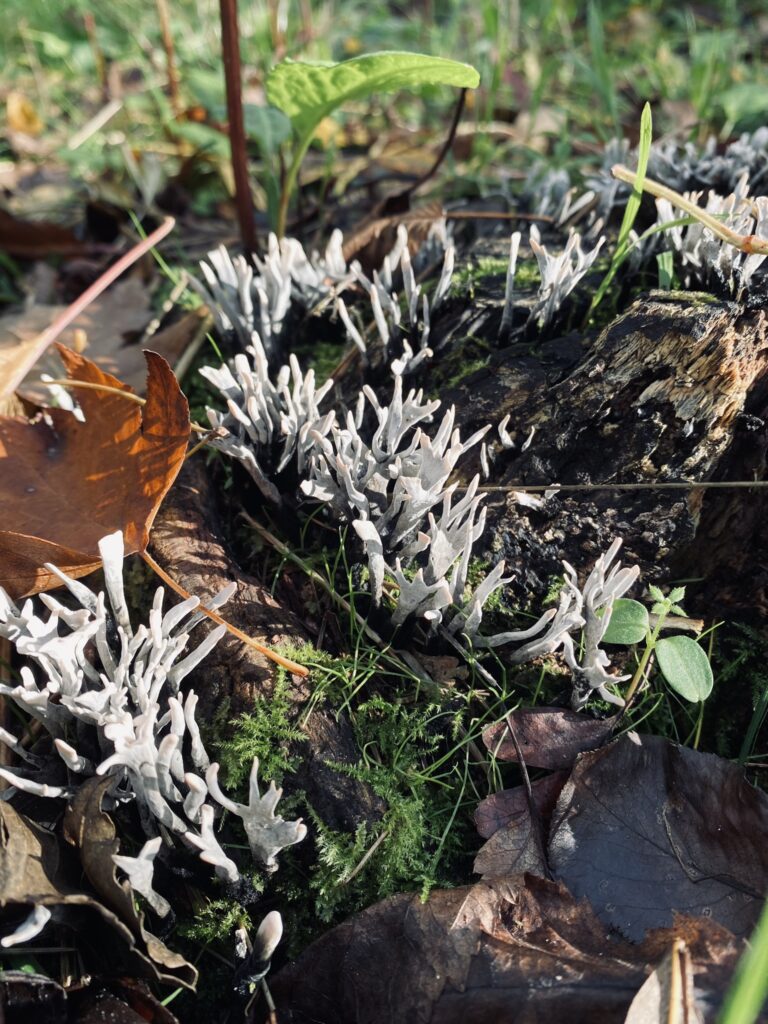
Candlesnuff fungi
It’s that time of year when fungi become more noticable as their fruiting bodies pop up into view. These are brilliant organisms that play an essential role in soil health and biodiversity. Many decompose plant and animal material releasing important nutrients (including carbon, nitrogen and phosphorus) into the soil making them available to the roots of plants and trees. The nutrients are turned into plant material which is food and shelter to many creatures. In time, in some form or another, the material returns to the fungi to release them for use again.
Fungi have an amazing range of colours and forms and also some weird and wonderful names and mythology. Be very careful with them though and treat them with respect, many are highly toxic and even experts can misidentify them. Admire their beauty and role in the world and stick to eating those you can buy in the shops.
The fungus in the photo is the Candlesnuff fungus (Xylaria hypoxylon), which loves rotting tree stumps and deadwood. This one was in a mixed woodland, it prefers broadleaf wood but can be found on pine. It’s usually the last fungus to arrive to the wood rotting party and the last to leave. When it’s finished, all that is left of the tree is a mass of soft and easily digestible wood matter for insects to eat. Don’t be in a hurry to clear away dead and rotting wood, instead enjoy watching the various fungi putting on a show while improving the soil and feeding the plants and insects.
As it has a kind of dead antler look, it’s sometimes also called Stag’s Horn fungus. It isn’t poisonous but it’s really small (<6cm) and tough so not worth eating. Interestingly, the candlesnuff contains compounds that are anti-viral and anti-cancer.